
Duct Cleaning & Sealing in Montgomery, AL
Weak airflow, hot rooms, and dust that never settles: leaky ducts are often the real cause, not the AC.
- ✓21-point audit in full
- ✓Call direct, no forms to fill
- ✓Serving Montgomery, Prattville & Wetumpka
THE ANSWER FIRST
Are your ducts the problem?
Often, yes. When one room stays hot while the rest of the house cools, when airflow from the vents feels weak, or when dust returns to the furniture days after cleaning, the ducts are the first place to look. Duct cleaning in Montgomery, AL starts with that question, because cleaning a sound duct system changes nothing, and sealing a dirty one leaves the dirt in place.
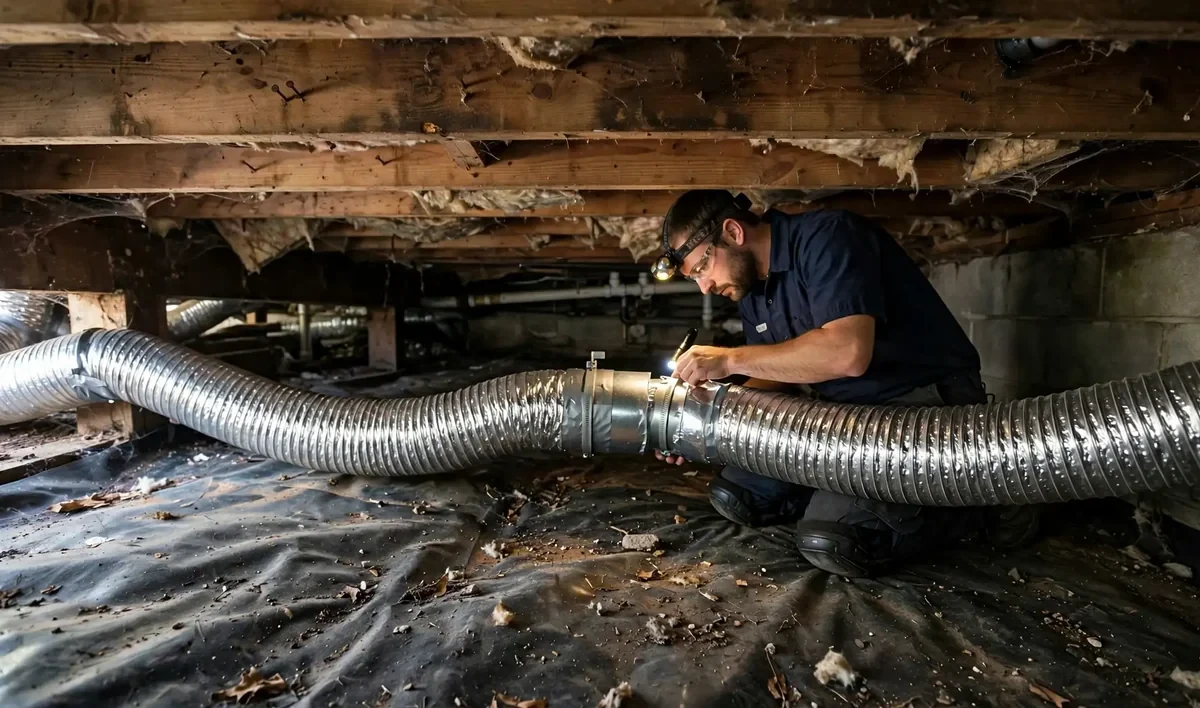
Montgomery homes make ducts easy to blame and hard to see. Slab foundations are the dominant construction here, so ducts usually run through the attic, a crawl space, or a closet chase, not under the floor. Attic ducts sit in the hottest part of the house all summer, and a leak there throws cooled air into the attic instead of the room. In Dalraida, the 1950s and 1960s brick homes carry slab-era duct runs. Basements are rare in Montgomery.
Humidity makes duct leaks worse than a simple airflow problem. Montgomery gets about 51 inches of rain a year, and summer humidity runs about 70 to 83 percent. A leak on the return side pulls hot, damp attic air into the system, and the house feels clammy even when the temperature looks right. That is why duct leakage is a comfort problem and a moisture problem at the same time.

SYMPTOMS
What are the signs of duct problems?
Duct problems show up as room-by-room symptoms, not as one big failure. The pattern matters more than any single sign, because a weak vent in one room and a hot room at the end of the run usually point at the same duct.
- Weak airflow from one vent, or from all the vents on one branch.
- One room always hot or cold while the rooms near the air handler feel fine.
- Dust that returns fast after cleaning, or dust puffing from a register when the system starts.
- Musty or stale air from the vents when the system runs.
- Visible gaps, crushed sections, or disconnected joints on any duct run you can see in the attic or crawl space.
One sign needs care. Dust on a return grille is normal, and a dirty filter is not the same as dirty ducts. Filters are built to load up, and changing them every one to three months is normal maintenance. If you are unsure, an inspection is cheaper than an unneeded cleaning, and far cheaper than ignoring a moisture problem.
ROOT CAUSE
How does duct leakage cause weak airflow?
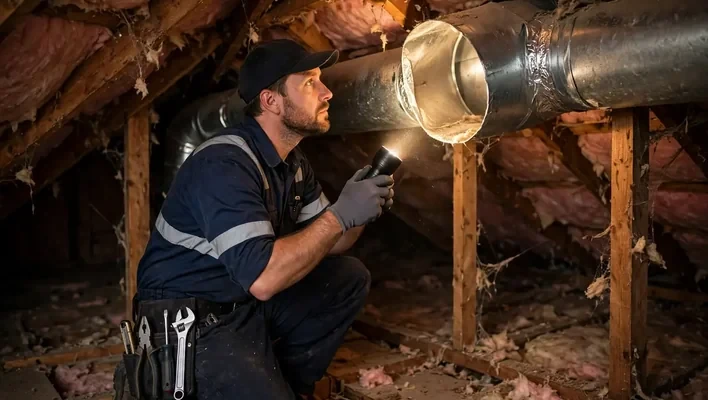
Think of the duct system as pipes carrying cooled air. A leak anywhere means some of that air never reaches the room. On the supply side, cooled air escapes into the attic or crawl space, so the far room gets a weak stream. On the return side, the system pulls in hot, humid air, so the air reaching the rooms is warmer and damper than it should be.
That is why a bigger AC cannot fix a duct problem. A larger unit pushes more air through the same leaks, and it short cycles, which leaves the house cold but clammy. The fix is in the ducts, not in the tonnage. Our page on AC repair in Montgomery covers the equipment side of weak airflow, so the two pages together separate an equipment fault from a duct fault.
Some ducts leak a little, some leak a lot, and the only honest answer comes from looking at the runs and testing the system. A duct-blast or blower-door test measures the leakage, and the test result decides whether sealing is worth doing and where it should go.
SEALING
What is duct sealing, and what does it fix?
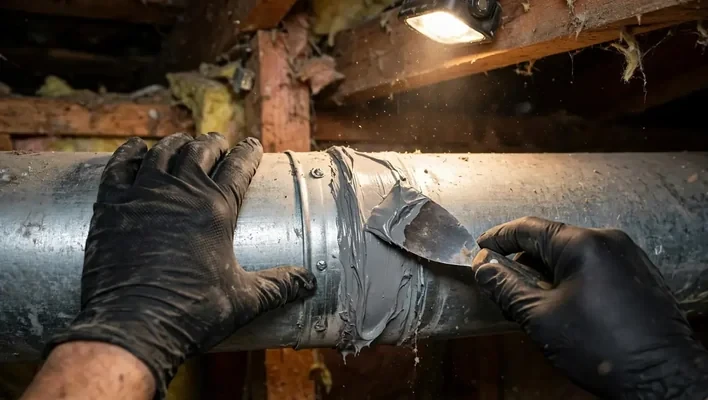
Duct sealing closes the gaps, joints, and connections where air escapes or enters the duct system. The usual method is mastic sealant or metal tape made for ducts, applied at the joints and seams, with insulation restored over the sealed run. Aerosol-based sealing exists too, and the visit decides whether it fits the house. What sealing fixes is specific: air that was going to the attic now goes to the room, and air that was pulled in from the attic no longer dilutes the cooled air.
Sealing does not fix everything. It does not fix a crushed duct, a disconnected run, or a duct sized too small for the room. Those are repair or replacement jobs. It also does not fix a dirty coil or a weak blower, which are equipment faults.
After sealing, the system is tested again. Airflow at the vents should rise in the rooms that were weak, and the temperature difference between the rooms should narrow. If it does not, the visit is not finished, and the next step is a look at the equipment or the duct layout itself.
CLEANING, HONESTLY
When does duct cleaning help, and when does it not?
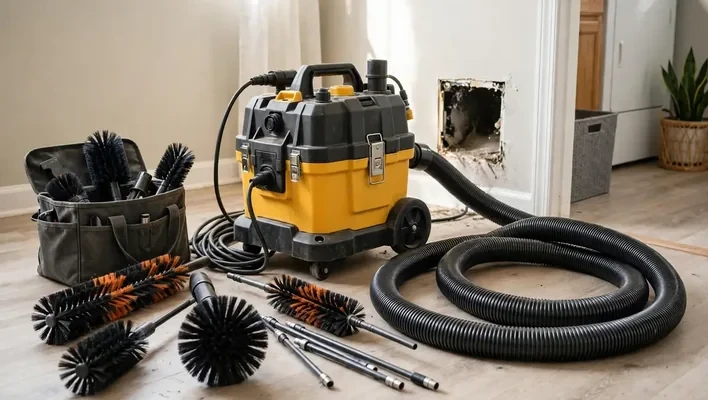
Cleaning helps when there is something in the ducts to remove. Visible dust and debris built up inside the runs, dust blowing from the registers when the system starts, debris left after a renovation, or a home bought with no record of the last cleaning are all real reasons. A cleaning removes that material from the supply ducts, the return ducts, the plenums, the air handler, the coils, and the registers as one system, not one part at a time.
Cleaning does not help when the ducts are already clean. A house with regular filter changes and no renovation, no pest issue, and no moisture event usually has ducts that do not need cleaning yet. Cleaning also does not cure allergies or fix a mold problem on its own. Where moisture or visible growth is found, the visit reports it, and the next step is a specialist assessment.
Two guides frame the schedule. The National Air Duct Cleaners Association suggests professional cleaning every 3 to 5 years for a typical home, and inspection every two years, with a shorter interval of 2 to 3 years for homes with shedding pets, smokers, or people with allergies or asthma. The Environmental Protection Agency does not recommend routine cleaning on a fixed schedule, and instead names conditions that call for cleaning: visible mold growth, vermin in the ductwork, or heavy clogging with dust being released into the home. Read together: clean on a reasonable interval, and clean at once when a trigger shows up.

THE VISIT
What does a good duct visit include?
A good visit has an order: inspect, test, then decide. The technician looks at the accessible runs for disconnection, crushing, and leaking, checks the registers and the air handler, and notes where the ducts run. Then airflow and leakage are tested, so the decision rests on a measurement, not a guess.
What changes the price is the size of the system, how many runs need work, how easy the attic or crawl space is to reach, and whether the job is cleaning, sealing, or both. A home with a single accessible run costs less to work on than a house with long attic runs in July heat. No figure is given here, because the visit decides the scope. The written price comes before work starts, and it names the cleaning and the sealing as separate lines, so you can see what each part costs.
After the work, the system runs and the vents are checked again. Rooms that were weak should feel stronger, and the air from the vents should run clear. If your home also feels clammy or dusty in a way ducts alone do not explain, our page on indoor air quality in Montgomery covers filtration, humidity control, and ventilation.
Before and after: duct cleaning and sealing in Montgomery
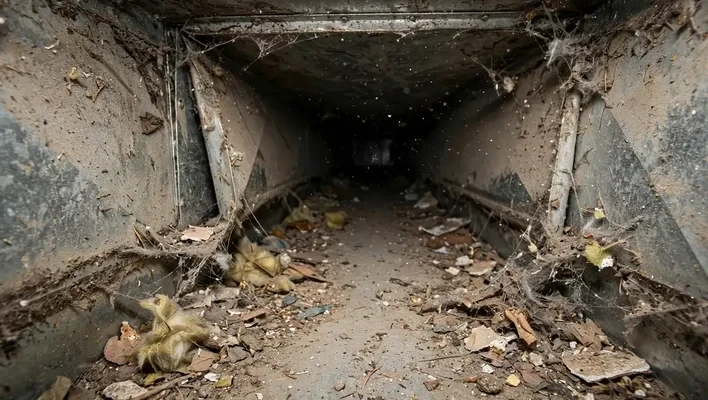
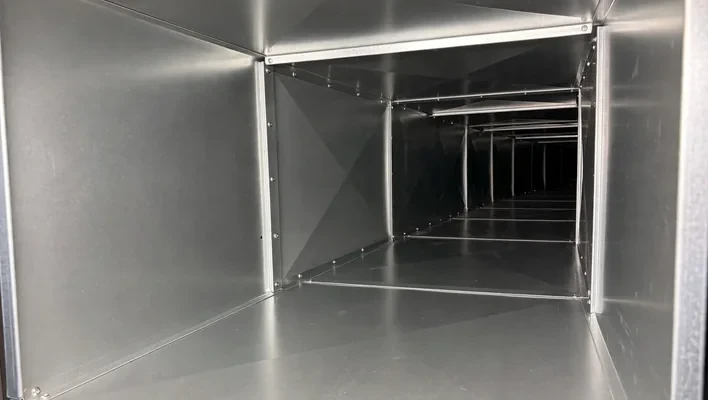 BeforeAfter
illustrative examples only
What to have ready when you call
Tell us which rooms feel wrong and what the ducts have been through. The visit starts from the symptoms, not from a schedule.
- Which rooms have weak airflow, and which rooms feel fine
- When the house was built, and whether the ducts run through the attic or a crawl space
- When the ducts were last cleaned, if you know
- Whether there has been a renovation, a water event, or a pest issue
- The filter size and type, and how often you change it
Have these notes by the phone. The call goes faster, and the technician arrives knowing what to look for.
QUESTIONS
What do Montgomery homeowners ask about duct cleaning and sealing?
Have the ducts inspected every two years, and plan a professional cleaning every 3 to 5 years for a typical home. Homes with shedding pets, smokers, or allergy sufferers should clean every 2 to 3 years. Any renovation, water event, or pest issue calls for a look at once.
For most homes, every 3 to 5 years is the usual guidance from the National Air Duct Cleaners Association. The EPA says to clean when a specific need shows up, like visible mold, vermin, or heavy clogging. Use the interval as a baseline and clean sooner when a trigger appears.
A good visit has an order: inspect, test, then decide. The technician looks at the accessible runs for disconnection, crushing, and leaking, checks the registers and the air handler, and notes where the ducts run. Then airflow and leakage are tested, so the decision rests on a measurement, not a guess.
Weak airflow from one vent or one branch, one room always hot or cold, dust that returns fast after cleaning, musty air from the vents, and visible gaps or crushed sections on runs you can see. The pattern across rooms matters more than any single sign.
Duct sealing closes the gaps and joints where air escapes or enters the duct system, usually with mastic sealant or metal tape made for ducts. It fixes air lost to the attic and hot, damp air pulled in from the attic. It does not fix a crushed or disconnected duct, which is a repair job.
Cleaning helps when there is something to remove: built-up dust and debris, dust blowing from the registers, or debris left after a renovation. It does not help when the ducts are already clean, and it does not cure allergies or fix a mold problem on its own.

CALL NOW
Weak airflow in one room? Start with the ducts, not a bigger AC
Weak Airflow? Call With the Room List
Tell us which rooms feel weak and which feel fine. A duct cleaning and sealing visit in Montgomery starts with an inspection and a test, and the written price comes before any work starts.
Ducts Cleaned, Air Still Clammy? Check Humidity Next
Read our page on indoor air quality in Montgomery: filtration, humidity control, and ventilation, and how they work with clean, sealed ducts.
A finished duct job is on our projects page, before and after.
- AC repair in Montgomery covers the equipment side of weak airflow, so an equipment fault and a duct fault can be told apart.
- Prattville and Wetumpka homes get the same visit process and written-price rule. See the areas we serve around Montgomery.
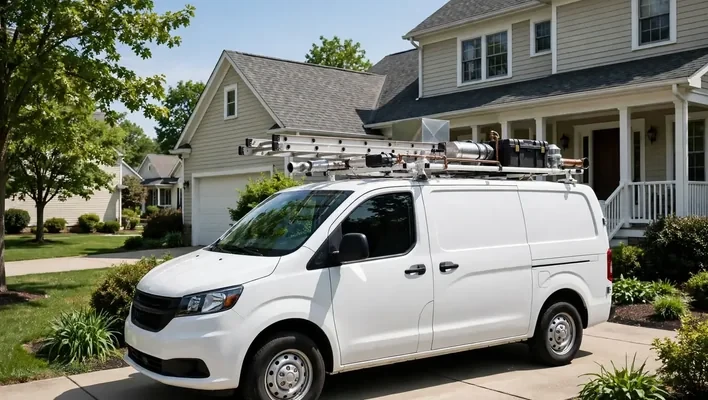
Find us
Duct cleaning and sealing in Montgomery: our Prattville base
Our base is at 714 E Main St in Prattville, a short drive up I-65 from Montgomery. Call (334) 555-0142, describe which rooms have weak airflow, and the technician comes to you.
- Areas served: Montgomery, Prattville and Wetumpka, with the same visit process in each city.
- What to have ready: the symptom, when it started, and the system brand and age if you know it.
- How the visit works: the technician comes to your home. This address is the base the visit starts from.
Cloverdale HVAC 714 E Main St, Prattville, Alabama 36067, USA