
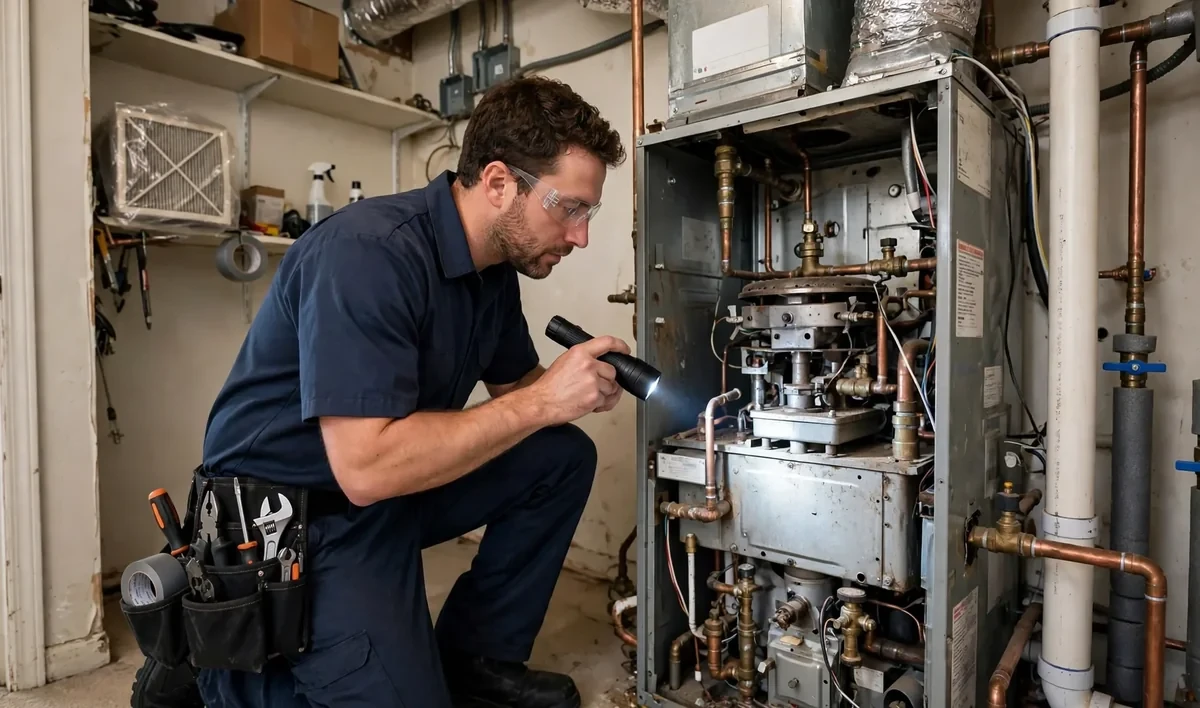
Furnace Repair in Montgomery, AL
No heat, strange smells, or a furnace that keeps stopping. Safety first, then a written price.
- ✓21-point audit in full
- ✓Call direct, no forms to fill
- ✓Serving Montgomery, Prattville & Wetumpka
SAFETY FIRST
Do you smell gas? Read this first
If you smell gas, leave the house first. Do not flip light switches, do not use the thermostat, do not unplug anything, and do not use your phone inside the house. A spark can ignite gas. Get everyone, including pets, out into fresh air, and call Spire at 800-292-4008 or emergency services from outside, once you are away from the house.
Do not go back in until the gas utility or the fire department says it is safe. Then call an HVAC technician to inspect the furnace and the gas connection. Do not try to light the furnace, and do not look for the leak yourself.
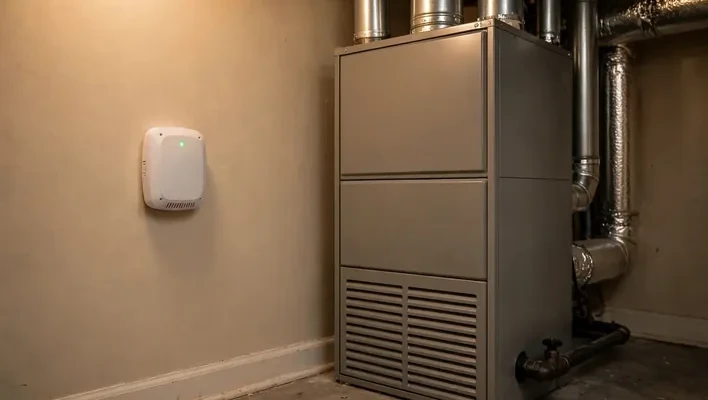
If your carbon monoxide alarm sounds, or anyone feels sick, with a headache, dizziness, nausea, or confusion, get everyone out into fresh air right away and call 911 from outside. Do not try to troubleshoot first. Carbon monoxide has no smell, so the alarm is the only warning you get. Once the home is cleared, have the furnace inspected before using it again.
ANSWER FIRST
Does your furnace need repair?
Yes, if the furnace runs but gives no heat, it keeps turning on and off, it will not start at all, or you hear a new noise or smell a new smell when the heat is on. A furnace that locks out, shutting itself off for safety, is telling you to stop and call. Do not keep resetting it.
Gas furnaces are common in Montgomery, and many homes run a dual system, a heat pump with a gas furnace as backup. Montgomery winters are mild, with a January low near 37 degrees, but cold snaps drop to 14 to 18 degrees, and there are about 37 freezing nights a year. A furnace that coped in November can fail on the coldest night of the year, so a no-heat call in a cold snap is worth making the same day.
NO HEAT
Why does my furnace run but give no heat?
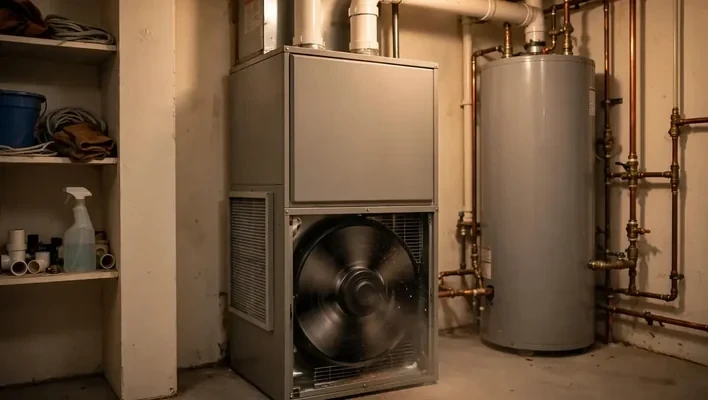
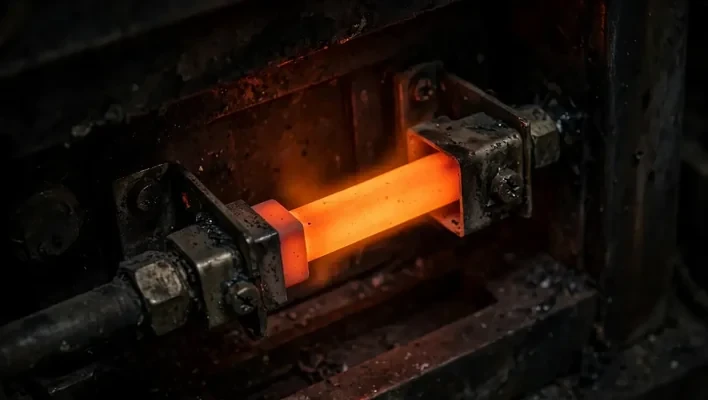
A furnace that runs but gives no heat usually has one of a short list of faults. The thermostat may be set wrong, or set to cool. The filter may be clogged, which overheats the furnace and trips a safety switch. The ignition may have failed, so the burners never light. The flame sensor may be dirty, so the furnace lights and then shuts down within seconds.
Two other causes sit outside the furnace itself. The gas valve may be closed, or the gas supply may be off. And the intake or exhaust pipes may be blocked, by leaves, a bird nest, or ice, which shuts the furnace down for safety. Gas, burners, and wiring are technician-only work. A homeowner checks the thermostat, the filter, and the pipes from outside, and stops there.
If the furnace lights and then stops again and again, that is short cycling, and the next section explains what to check and when to call.
SAFE CHECKS
What can you safely check?
Work through these in order, and stop at anything involving gas, burners, or wiring.
- Thermostat: set it to HEAT, the temperature a few degrees above the room temperature, and the fan to AUTO. If it runs on batteries, check them.
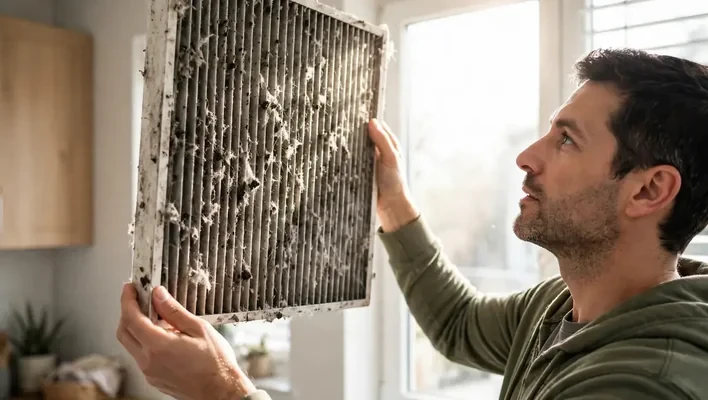
- Filter: hold it up to the light. If you cannot see light through it, it is overdue. Replace it with the same size and type. A clogged filter can overheat a furnace and trip a safety switch.
- Power switch: the furnace has a power switch, usually on the wall near the unit, that looks like a light switch. Make sure it is on.
- Breaker: if the furnace breaker has tripped, switch it back on once. If it trips a second time, leave it off.
- Intake and exhaust pipes: look at the pipes where they leave the house. Clear leaves and debris from around the openings, and look for obvious separation or rust. Do not open the furnace, and do not touch the vent connection inside.
- Gas smell or CO alarm: if you smell gas, or the CO alarm sounds, do not run these checks. Leave the house and call Spire at 800-292-4008 or 911 from outside.
COMMON FAILURES
What usually fails?
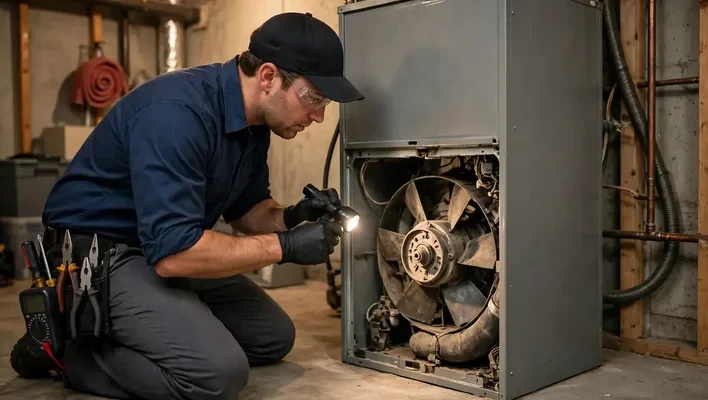
The parts that fail most often are the same short list. The igniter or hot surface igniter lights the burners, and when it fails the furnace never lights. The flame sensor proves the flame is there, and when it is dirty the furnace lights and then shuts down. The blower motor moves the heated air, and when it fails the furnace overheats and trips a safety switch.
The control board runs the sequence, and the inducer motor clears the exhaust before the burners light. The gas valve opens the gas, and the pressure switch proves the vent is clear. A cracked heat exchanger is the serious fault: it can let carbon monoxide into the air, and it is found by a technician inspection, not by a homeowner check.
Carbon monoxide warning signs at the furnace are worth knowing: soot or dark staining near the furnace or vent pipe, rust or damage on the vent pipe, a flame that looks yellow or flickers instead of steady blue, and a pilot light that keeps going out. A short dust-burning smell can come with the first startup of the season. If the smell lasts longer than a few minutes, turn the furnace off and call.
| Part | Symptom it causes | What the technician checks |
|---|---|---|
| Igniter | Furnace will not light at all | Whether the igniter has failed, and whether power reaches it |
| Flame sensor | Furnace lights, then shuts down within seconds | Whether the sensor is dirty or worn, and whether the flame is steady |
| Blower motor | No air from the vents, or the furnace overheats and trips | The motor, its capacitor, and the airflow at the vents |
| Control board | Furnace will not start, or starts and stops without a pattern | The board, the thermostat signal, and the safety switches |
| Inducer motor | Furnace will not start, or a loud noise before ignition | The motor and the vent path it clears |
| Gas valve | No gas to the burners, no heat at all | The valve, the gas supply, and the ignition sequence, all tested by the technician |
| Heat exchanger | CO alarm sounds, soot, or a flame that looks wrong | A full inspection for cracks, holes, and corrosion, technician-only work |
REPAIR OR REPLACE
Should I repair or replace my furnace?
Work the two rules from your written quote. $5,000 rule: system age in years times repair cost. Past $5,000, replacement is usually the smarter move. 50% rule: repair over half the replacement cost, and replacement is usually smarter.
What failed matters. An igniter or flame sensor is a single part, while a cracked heat exchanger or a failed control board is a core fault, and the decision follows that difference. A replacement conversation also makes sense when repairs keep stacking up, or when the furnace cannot keep up on cold nights.
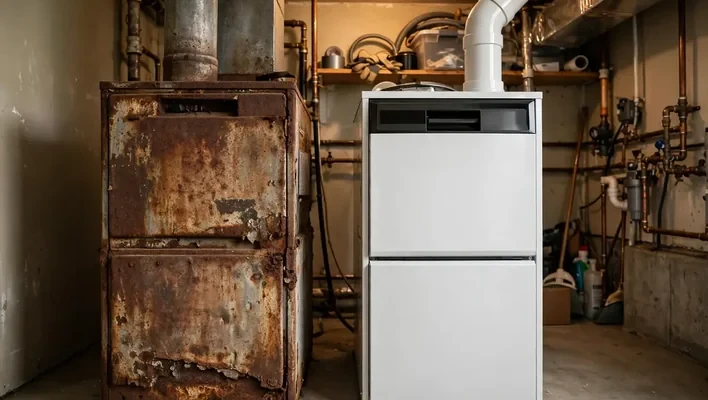
Carrier puts furnaces at 15 to 20 years, and the U.S. Department of Energy puts a gas furnace at 15 to 30 years, but age alone never decides. If replacement is the smarter move, our page on furnace installation in Montgomery covers AFUE, sizing, and dual-fuel options. Homes with a heat pump and a gas furnace should also read our page on heat pump repair in Montgomery, because a dual-fuel fault can sit on either side.
THE VISIT
What happens on a furnace repair visit in Montgomery?
Book
Say what the furnace is doing and when the trouble started. Say whether you smell gas or the CO alarm sounded, so the technician knows the visit is a safety visit.
Inspection and Diagnosis
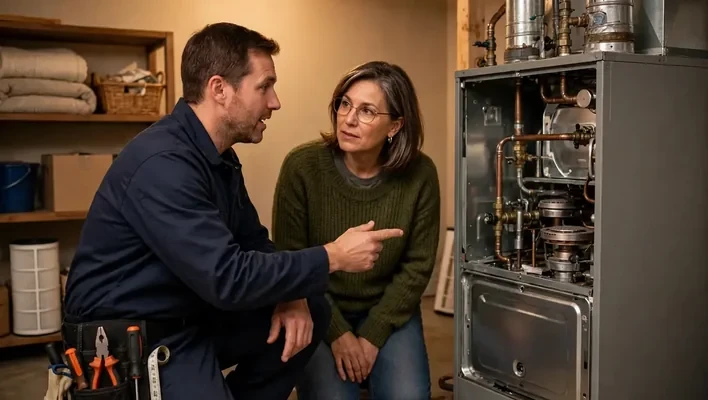
The technician examines the furnace, the venting, and the safety controls to find the fault, and checks the heat exchanger and the CO alarms as part of the visit.
Repair or Replacement
The technician explains the fault in plain words, and talks you through what the repair will involve. Before any work begins, get the repair figure in writing, and the replacement figure next to it if a new furnace is genuinely an option. Work starts only after you approve it.
Safety Check
Once the repair is in, the furnace is run and checked. The technician verifies heat at the vents, airflow, and that the safety controls work before leaving.
A maintenance visit follows the same pattern. It covers the heating half of the 21-point audit in full on our maintenance plan page: filter, ignition, flame sensor, blower, venting, and CO alarm check. The fall heating check, done before the cold arrives, covers those points.
If your furnace has not been inspected this year, or you have noticed any warning signs above, have it looked at before the next cold snap.
Before and after: furnace repair in Montgomery
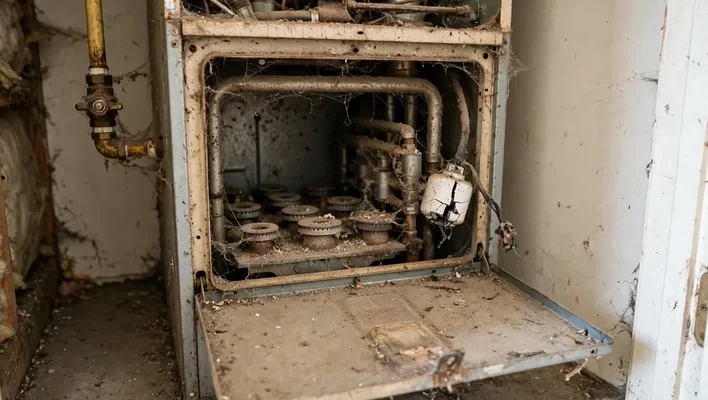
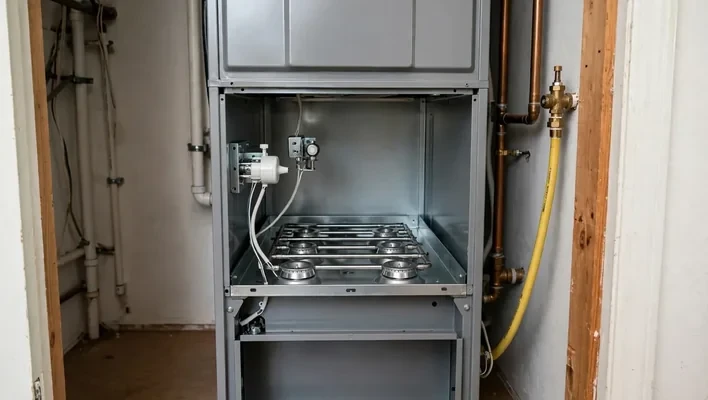 BeforeAfter
illustrative examples only
Before and after: furnace repair, second example
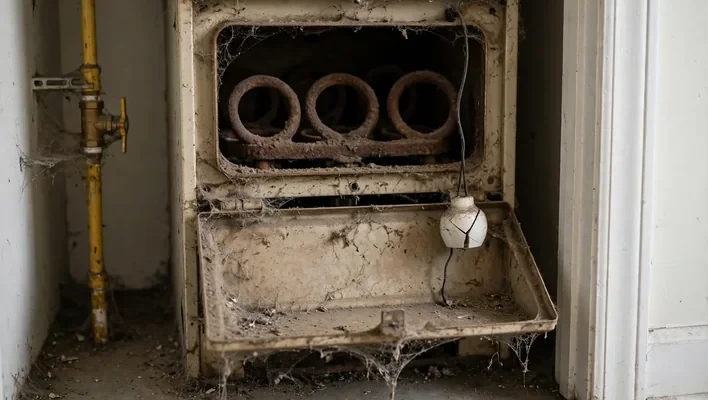
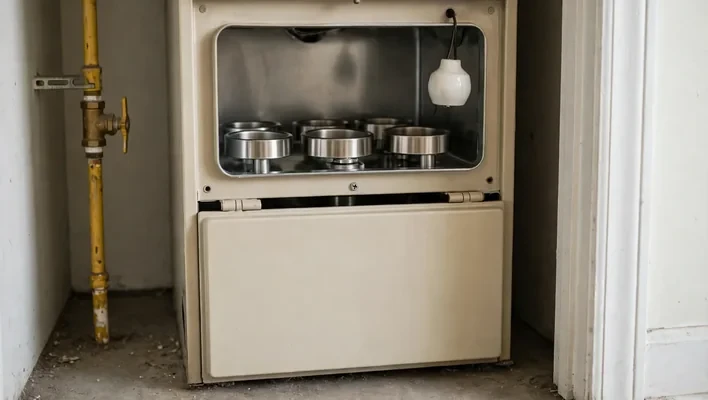 BeforeAfter
illustrative examples only
READY
What to have ready when you call
Have these five details handy when you call.
- What the furnace is doing: runs with no heat, will not start, or keeps turning on and off.
- Gas smell or CO alarm: say this first, before anything else, so the visit is treated as a safety visit.
- Thermostat setting: the mode, the set temperature, and whether the fan is on AUTO or ON.
- Filter condition: when it was last changed, and whether you can see light through it.
- Model and age: the brand and age of the furnace if you know it, from the label on the unit.
QUESTIONS
What do Montgomery homeowners ask about furnace repair: no heat, gas smell, and short cycling?
Check the thermostat first: HEAT mode, set above room temperature, fan on AUTO. Then hold the filter up to the light and replace it if you cannot see through it. Check the power switch by the furnace and the breaker once. If those are fine, call. Ignition, gas, and wiring are technician-only.
Short cycling usually means a clogged filter overheating the furnace, a thermostat problem, or a dirty flame sensor shutting the burners down. It can also mean a furnace too big for the house. Check the filter first. If the filter is clear and it keeps stopping, call a technician.
Leave the house right away and take everyone with you. Do not flip light switches, use the thermostat, or use your phone inside. From outside, call Spire at 800-292-4008 or 911. Do not go back in until the utility or fire department says it is safe.
Work the two rules from your written quote: age times repair cost against $5,000, and repair cost against half the replacement cost. What failed matters too. An igniter is a single part, while a cracked heat exchanger is a core fault. Age alone never decides.
Soot or dark staining near the furnace or vent pipe, rust or damage on the vent pipe, a flame that looks yellow or flickers instead of steady blue, and a pilot light that keeps going out. A CO alarm sounding is the clearest warning. Leave the house and call 911 from outside.
Thermostat on HEAT, set above room temperature, fan on AUTO; filter held up to the light; power switch on; breaker checked once. If the breaker trips again, stop. If you smell gas or the CO alarm sounds, skip the checks, leave the house, and call Spire or 911.
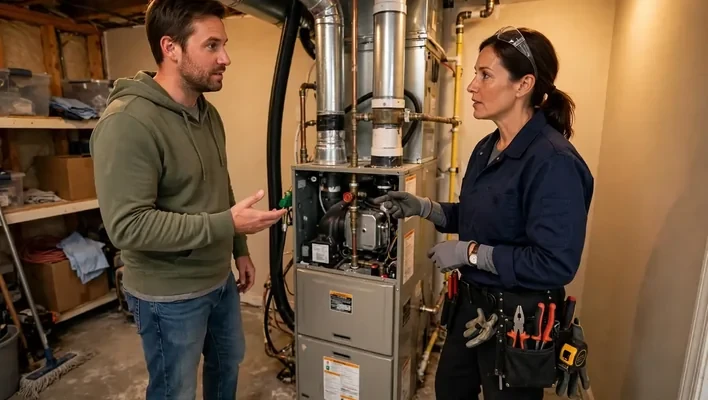
CALL NOW
Furnace not heating? Check the gas smell first, then call
No Heat, or a Gas Smell? Call Now
Safety first, then a written price. If you smell gas, leave the house and call Spire at 800-292-4008 or 911 from outside. For any other furnace fault, call us and describe what the furnace is doing.
Repair or Replace? Work It From Your Written Quote
On our page about furnace installation in Montgomery, AFUE tiers, sizing at 27 degrees, and dual-fuel options, all on one written quote.
Homeowners describe this job in different words: furnace repair Montgomery AL and gas furnace repair Montgomery AL all mean the same safety-first visit, with the same written price before work.
No heat at all? Our guide to a furnace that runs but gives no heat works through the safe checks in order.
- A finished furnace job is on our projects page, before and after.
- Furnace runs but no heat? Our guide to a furnace with no heat covers the thermostat, filter, and ignition checks first.
- The same visit process and written-price rule apply in Prattville homes and Wetumpka homes, one rule for three cities.
Find us
Furnace repair in Montgomery: our Prattville base
Our base is at 714 E Main St, Prattville, just off I-65 from Montgomery. Call (334) 555-0142, describe the problem, and the technician comes to you. The same visit covers furnace repair in Montgomery homes and in Prattville and Wetumpka homes, with the same written price before work.
- Areas served: Montgomery, Prattville and Wetumpka, with the same visit process in each city.
- What to have ready: the symptom, when it started, and the system brand and age if you know it.
- How the visit works: the technician comes to your home. This address is the base the visit starts from.
Cloverdale HVAC 714 E Main St, Prattville, Alabama 36067, USA (334) 555-0142