
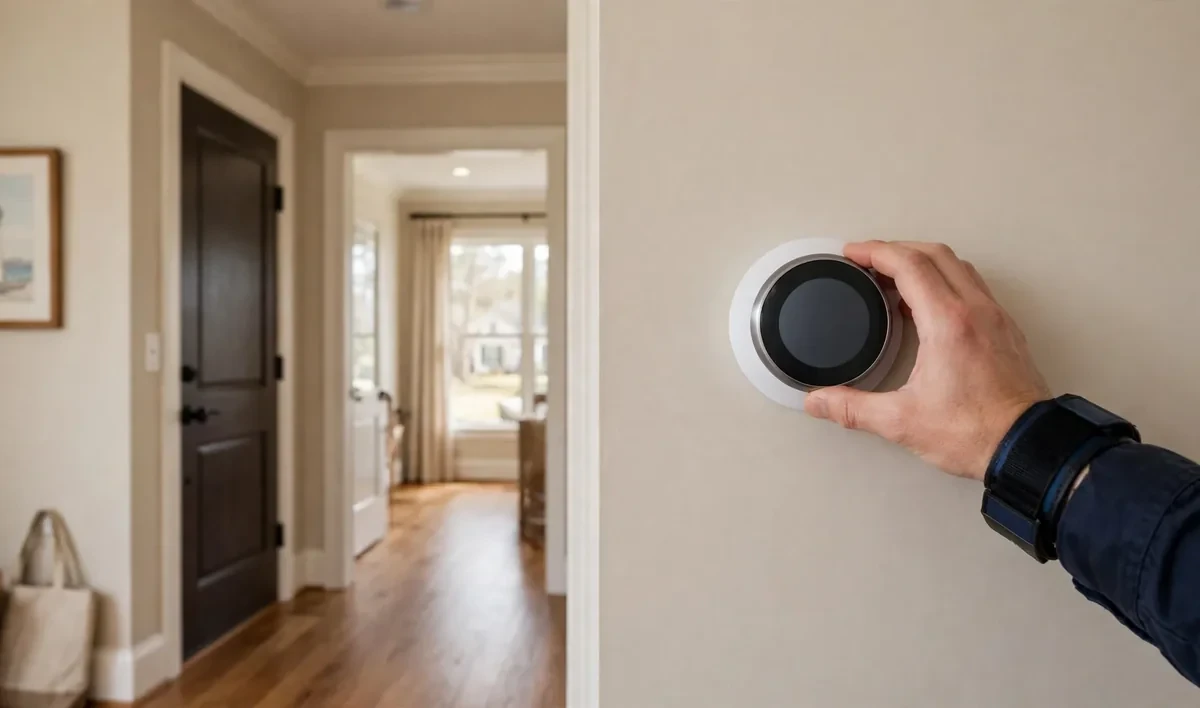
Thermostat Installation in Montgomery, AL
A new thermostat only helps if it matches your system. Heat pump, dual-fuel, or multi-stage: compatibility comes first.
- ✓21-point audit in full
- ✓Call direct, no forms to fill
- ✓Serving Montgomery, Prattville & Wetumpka
THE ANSWER FIRST
Do you need a new thermostat?
You need a new thermostat when the old one no longer controls the system it serves. A display that stays dark, a system that heats when it should cool, rooms that never reach the set temperature, or a thermostat that cannot run the equipment you already own are all reasons to replace it. A thermostat installation in Montgomery, AL starts with the system, not the thermostat, because the wrong control on the right system causes more trouble than the old thermostat did.
Montgomery homes mix system types. Many houses run a heat pump, many run a gas furnace, and many run both as a dual-fuel pair. A thermostat built for a simple furnace cannot run a heat pump properly, and a thermostat built for a heat pump needs the right settings for backup heat. Compatibility is the whole job, decided before anything is bought.
A new thermostat does not fix a broken system. If the AC blows warm air, the furnace gives no heat, or the heat pump runs on backup heat all day, the thermostat is not the cause until the equipment is checked. Our pages on AC repair in Montgomery and heat pump repair in Montgomery cover those faults.
COMPATIBILITY
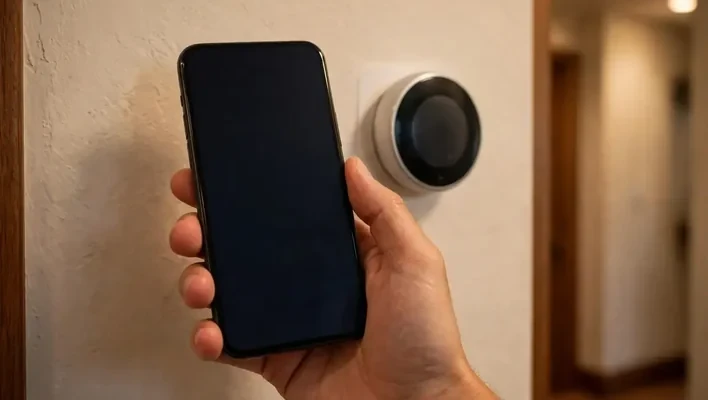
Will it work with my system?
Most modern programmable and smart thermostats support heat pumps, but not all do, and the details decide it. A heat pump needs a thermostat that controls the reversing valve through an O or B terminal, and controls backup heat through an AUX or W2 terminal. The reversing valve decides whether the heat pump heats or cools, and most brands energize it in cooling, which is the O setting, while a few energize it in heating, which is the B setting. Get that setting wrong and the system heats in cool mode and cools in heat mode.
Dual-fuel adds a second decision. A dual-fuel home pairs a heat pump with a gas furnace, and the thermostat has to hand over from one to the other at the right outdoor temperature. Multi-stage systems add a third: two heating stages and two cooling stages need a thermostat that can stage them, or the system runs at full power when half would do.
The check is done from the wiring and the equipment, not from the thermostat box. The technician reads the terminals on the old thermostat, the wiring at the air handler or furnace, and the outdoor unit manual, then confirms the new thermostat supports that exact combination. A compatibility tool from the thermostat maker is a useful second check, but it does not replace reading the wiring.
THE C-WIRE
What is a C-wire, and do I have one?
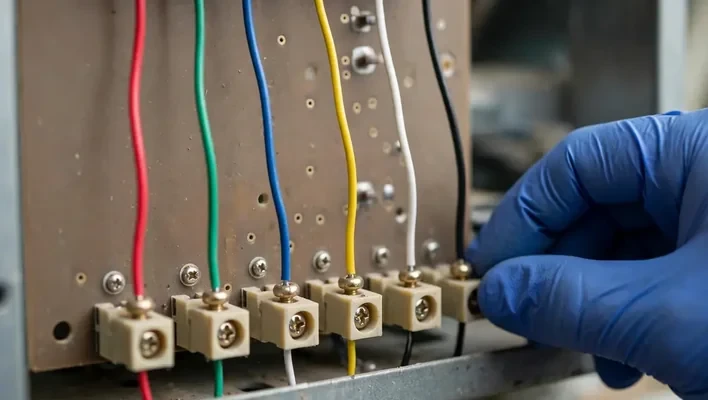
A C-wire, or common wire, gives the thermostat continuous 24-volt power. Older mechanical and battery thermostats did not need one, because they ran on batteries and switched the system with a simple contact. Most smart thermostats do need one, because the display, the Wi-Fi radio, and the processor draw power all the time.
Whether you have one is answered at the wall plate. Turn off the power at the breaker first, then remove the thermostat from its plate and look at the wires. A wire landed on the C terminal is a C-wire. Wire colours are conventions, not rules, so go by the terminal labels, and label every wire by the terminal it came from before you touch anything. If there is a spare conductor in the wall cable, it can be pressed into service as a C-wire at the control board. If there is no spare, a C-wire adapter installs at the control board instead of pulling new cable.
Wiring is technician-only work. Turn off power at the furnace or air handler before touching the wires, and treat every wire as if it could carry current, whatever it is labelled. A wrong connection can damage the thermostat or the control board, and a shorted wire can blow the low-voltage fuse. The install visit handles the wiring.
SENSORS AND SETTINGS
What are remote sensors for?
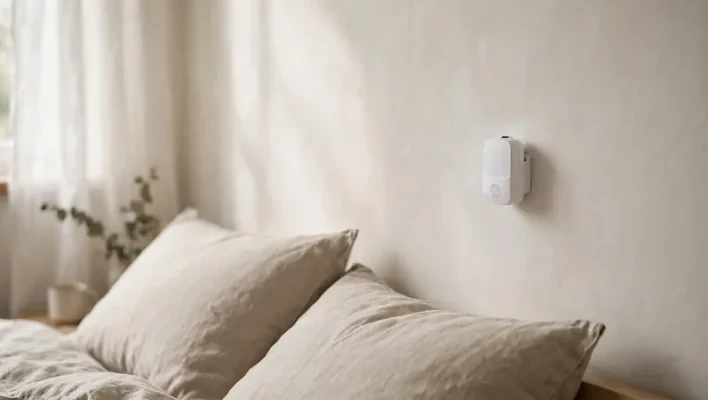
A remote sensor is a small temperature sensor placed in a room away from the thermostat. The thermostat then reads that room instead of, or as well as, the hallway where it sits. Two-storey homes and bonus rooms are the usual reason: the thermostat sits downstairs in a cool hallway while the upstairs bedroom runs hot, and the system stops before the bedroom is comfortable.
Sensors also help with rooms used at different times. A home office used all day can carry the sensor during work hours, and the bedroom can carry it at night. Either way, the sensor only helps if the ductwork can deliver air to that room, and a room with weak airflow needs the duct check first, on our duct cleaning and sealing page.
Settings matter as much as hardware on a heat pump. Small setpoint changes of 2 to 3 degrees, or smart recovery that eases the temperature back up, keep the expensive backup strip heat off. A deep setback overnight forces the system to call for backup heat to recover, which costs more than the setback saved. The aux-heat lockout keeps strip heat off above a set outdoor temperature, near the balance point, often 30 to 40 degrees. A lockout set for a Minnesota winter does not apply in Montgomery, where design heating is 27 degrees and cold snaps reach 14 to 18 degrees.
On savings, one honest note. ENERGY STAR reports an average saving of about 8 percent for certified smart thermostats, but that is an average, not a promise for your house. Your saving depends on the house, the system, and how the thermostat is used. No saving figure is guaranteed on this page.
THE INSTALL
What does a good install include?
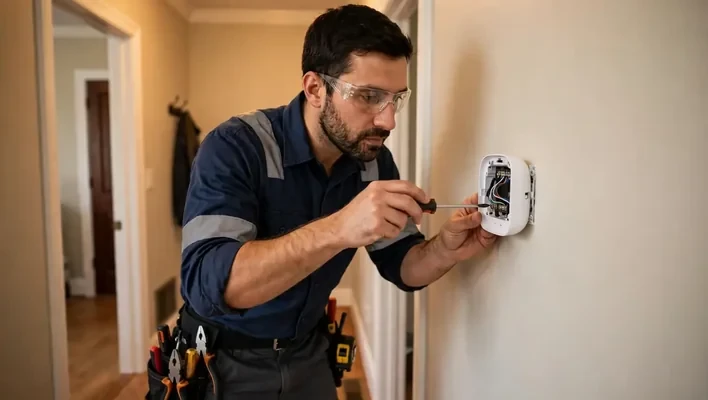
A good install is a short job done in full. Power off at the breaker. Old thermostat removed, wires labelled by terminal. New wall plate mounted level, wires landed on the right terminals, C-wire confirmed or adapter fitted. System tested in heating and in cooling, reversing valve setting confirmed, backup heat tested, and the schedule set up with you, not for you.
What changes the price is the thermostat model, whether a C-wire or an adapter is needed, how many sensors are added, and whether the wiring needs repair. A simple swap on a system that already has a C-wire is the smallest job. A heat pump with backup heat and three sensors is a bigger one. The written price comes before work starts, and it names the thermostat, the wiring work, and the sensors as separate lines.
One more check belongs on the install visit. Alabama Power offers a smart thermostat rebate of up to 200 dollars, and the programme page is the place to confirm the current terms. The visit can confirm whether the thermostat you chose qualifies.
Call About Thermostat Compatibility
Before and after: thermostat installation in Montgomery
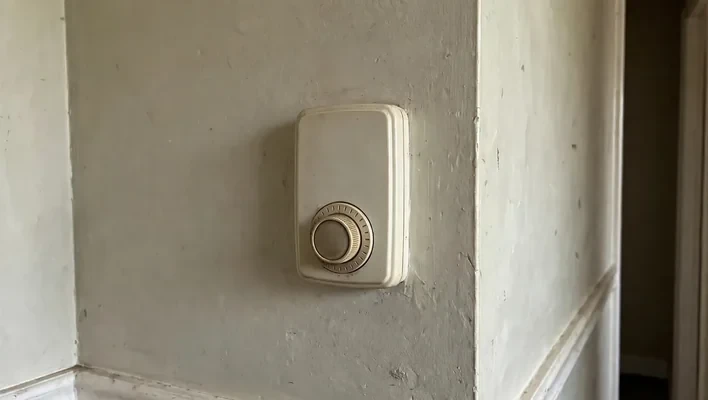
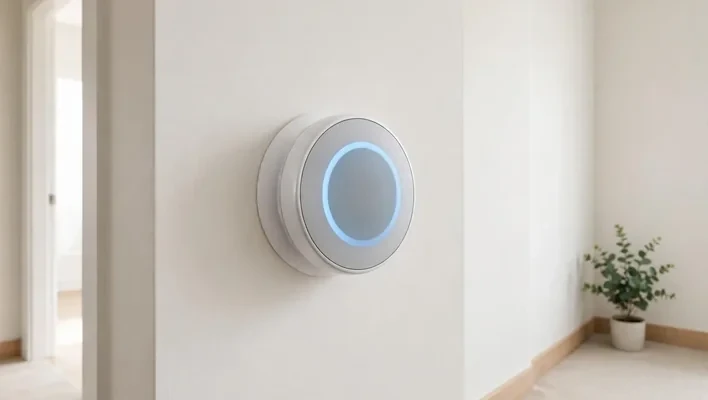 BeforeAfter
illustrative examples only
What to have ready when you call
Tell us about the system behind the wall, not just the thermostat you like. Compatibility is decided from the wiring and the equipment.
- The type of system you have: heat pump, gas furnace, or both
- Whether the old thermostat has a wire on C, O or B, AUX, or W2, if you can see them
- Which rooms feel wrong, and whether the thermostat sits in one of them
- Whether you want remote sensors, and for which rooms
- The make and model of the thermostat you already bought, if you bought one
Have these notes by the phone. The call goes faster, and the technician arrives knowing what to look for.
QUESTIONS
What do Montgomery homeowners ask about thermostat installation?
Most modern smart thermostats support heat pumps, but not all do. A heat pump needs O or B control for the reversing valve and AUX or W2 control for backup heat. The check is done from your wiring and your equipment, before anything is bought.
It depends on your wiring and your system type. A simple swap on a furnace with a C-wire is the easiest case. A heat pump with backup heat, or a home with no C-wire, needs a compatibility check and technician wiring first. Power must be off before any wire is touched.
Check the batteries first, if it takes them, then check the breaker for the furnace or air handler. A dark display can also mean a blown low-voltage fuse or a tripped safety switch. If both are fine, stop and call, because the fault is inside the equipment.
Auto, for most Montgomery homes. Auto runs the fan only while heating or cooling, so moisture stays on the coil and drains away. On runs the fan all the time, which can return moisture to the air and leave the house feeling clammy between cycles.
A C-wire gives the thermostat continuous 24-volt power, and most smart thermostats need one. Look for a wire on the C terminal behind the wall plate, with the power off. If there is none, a spare conductor or a C-wire adapter at the control board can supply it.
CALL NOW
Thermostat upgrade in mind? Check compatibility before you buy
New Thermostat? Call With Your System Type
Tell us whether you have a heat pump, a gas furnace, or both. Thermostat installation in Montgomery starts with a compatibility check, and the written price comes before any work starts.
Thermostat Fine, System Not? Check the Equipment First
Read our page on heat pump repair in Montgomery: defrost, reversing valve, and backup heat, and when the thermostat is not the cause.
A finished thermostat job is on our projects page, before and after.
- Indoor air quality in Montgomery explains the fan On or Auto choice and why it matters for humidity.
- Prattville and Wetumpka homes get the same visit process and written-price rule. See the areas we serve around Montgomery.
Find us
Thermostat installation in Montgomery: our Prattville base
Our base is at 714 E Main St in Prattville, a short drive up I-65 from Montgomery. Call (334) 555-0142, describe your system type, and the technician comes to you.
- Areas served: Montgomery, Prattville and Wetumpka, with the same visit process in each city.
- What to have ready: the symptom, when it started, and the system brand and age if you know it.
- How the visit works: the technician comes to your home. This address is the base the visit starts from.
Cloverdale HVAC 714 E Main St, Prattville, Alabama 36067, USA