
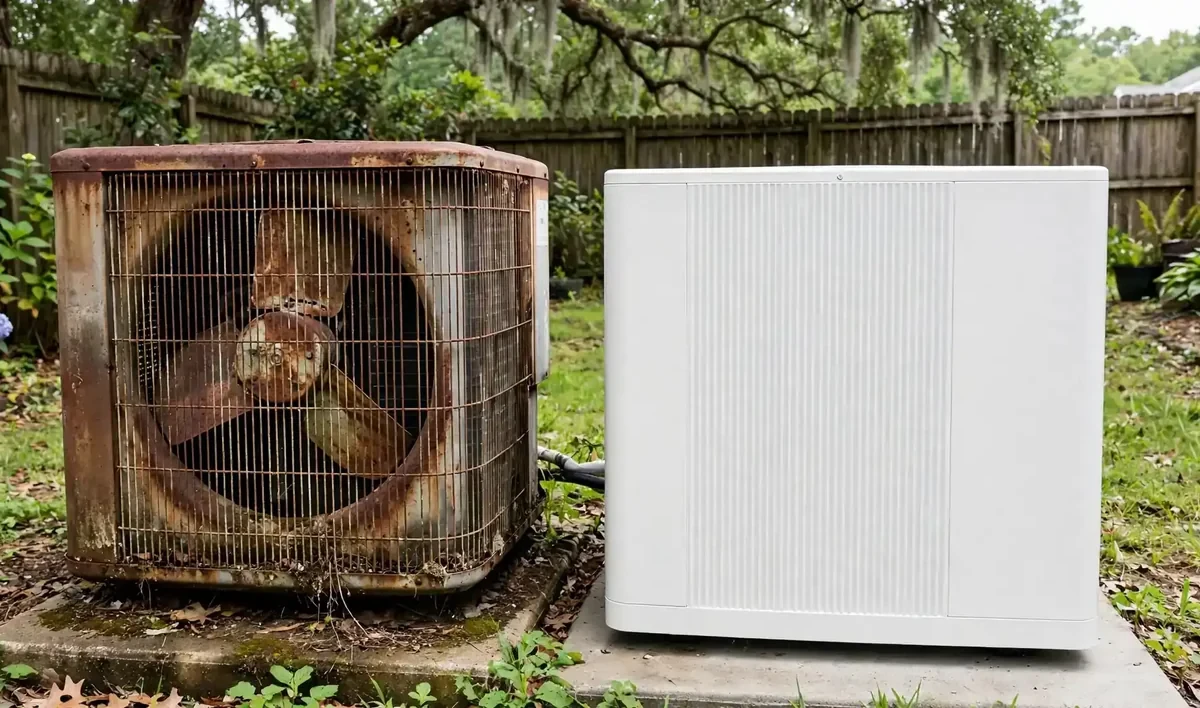
Should I Repair or Replace My AC?
Repair or replace comes down to two rules and three tie-breakers. Work the $5,000 rule and the 50% rule from your written quote, then let what failed, the refrigerant, and the age tip the decision.
- ✓21-point audit in full
- ✓Call direct, no forms to fill
- ✓Serving Montgomery, Prattville & Wetumpka
Should I repair or replace my AC?
Repair or replace is a maths question, not a feeling. Two rules answer it: the $5,000 rule and the 50% rule. Both work from your written quote, because the costs depend on your home and your system, not on an average.
Three tie-breakers sit behind the rules: what failed, the refrigerant type, and the age of the system. A failed capacitor and a failed compressor are not the same decision, even on the same system.
- $5,000 rule: age times repair cost. Over $5,000 points at replacement.
- 50% rule: repair cost against replacement cost. Over half points at replacement.
- Our page on AC repair in Montgomery covers the repair side of the decision.

How old is too old?
Age alone does not decide it. A 12-year-old system with a failed capacitor can still be worth fixing, because the part is small and the rest of the system is healthy. With a failed compressor it is a different decision, because the part is large and the system is old.
The guide used here is 10 years: a system more than 10 years old that needs a major repair is usually closer to replacement than one that needs a small part.
- More than 10 years old plus a major repair usually points at replacement.
- More than 10 years old plus a small part can still point at repair.
- Our page on AC installation in Montgomery covers the replacement side.

What does the $5,000 rule say?
Multiply the age of the system by the repair cost. If the result is more than $5,000, replacement is usually the better call. A 12-year-old system with a $500 repair gives 6,000, which points at replacement. A 6-year-old system with the same repair gives 3,000, which points at repair.
The rule ties the repair to the life left in the system. A young system has years left to pay it back, and an old system does not.
- Age times repair cost: the only two numbers the rule needs.
- Over $5,000: replacement is usually the better call.
- Under $5,000: repair is usually the better call.
- The nameplate gives the age. Our page about which refrigerant your AC uses shows where to find it.
- The quote gives the repair cost in writing.

What does the 50% rule say?
Compare the repair cost with the cost of a new system. If the repair costs more than half of a replacement, replacement is usually the better call. A repair that costs a third of a new system usually points at repair. The rule only works from your written quote.
The two rules agree. When they disagree, the tie-breakers decide it.
- Repair over half of replacement: replacement is usually the better call.
- Repair under half of replacement: repair is usually the better call.
- Both rules from the same quote: the repair cost and the replacement cost, in writing.
- SEER2: the replacement cost depends on the rating you choose. Our page about SEER2 explained covers the numbers.
What tips the decision?
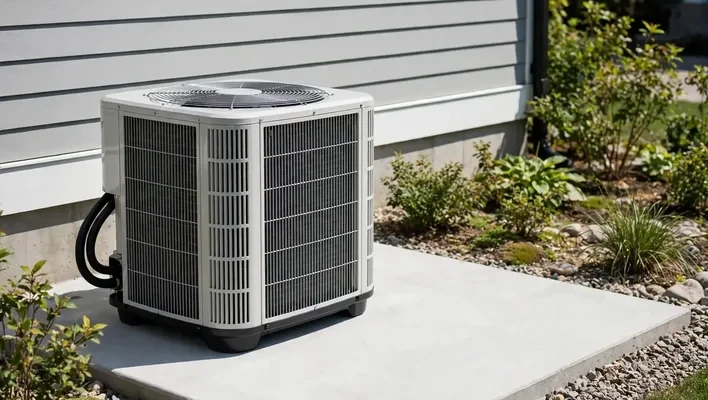
Three things tip it: what failed, the refrigerant type, and the age. A failed capacitor tips toward repair, because the part is small. A failed compressor tips toward replacement, because the part is large and the system has to be opened up. A refrigerant leak tips toward repair if it is small and found early, and toward replacement if it keeps coming back.
An R-22 system tips toward replacement, because R-22 is phased out. A system more than 10 years old with rising bills tips toward replacement, even if the repair itself is small.
- What failed: capacitor tips toward repair, compressor tips toward replacement.
- Refrigerant type: R-22 tips toward replacement, R-410A does not tip the decision on its own.
- Age: more than 10 years old tips toward replacement when the repair is major.
Repair or replace: the table
Work both rules from your written quote, then read the tie-breakers. The table shows genuine repair rows as well as replacement rows.
| Situation | What the rules say | Leans |
|---|---|---|
| Failed capacitor, system 6 years old | $5,000 rule: 6 times a small repair stays well under $5,000. 50% rule: the repair is a small share of a new system. | Repair |
| Frozen coil from a clogged filter | Cleaning and a new filter cost far less than half of a replacement, and the $5,000 rule stays low. | Repair |
| Failed compressor, system 13 years old | $5,000 rule: 13 times a major repair passes $5,000. 50% rule: the repair is a large share of a new system. | Replace |
| R-22 system with a failed compressor | R-22 is phased out, so the refrigerant side of the repair points the same way as both rules. | Replace |
| System more than 10 years old, third major repair in two years | Both rules point at replacement, and the repair history tips it further the same way. | Replace |
Your questions, answered
It depends on the age of the system, the cost of the repair, and what failed. A small part on a healthy system is usually worth fixing, while a failed compressor on an old system usually points at replacement. The $5,000 rule and the 50% rule below turn that judgement into maths, worked from your written quote.
Age alone does not decide it, but age changes the maths. A system more than 10 years old that needs a major repair is usually closer to replacement than one that needs a small part. The rules below use age with the repair cost, so a 12-year-old system with a failed capacitor can still be worth fixing.
Multiply the age of the system by the repair cost. If the result is more than $5,000, replacement is usually the better call. A 12-year-old system with a $500 repair gives 6,000, which points at replacement. A 6-year-old system with the same $500 repair gives 3,000, which points at repair. The quote gives you both numbers.
Compare the repair cost with the cost of a new system. If the repair costs more than half of a replacement, replacement is the better call. A repair at a third of a new system points at repair. The rule only works from your written quote, because the replacement cost depends on your home and your system.
Three things tip it: what failed, the refrigerant type, and the age. A failed capacitor tips toward repair, a failed compressor tips toward replacement. An R-22 system tips toward replacement, because R-22 is phased out. A system more than 10 years old with rising bills tips the same way, even if the repair itself is small.
Got a quote in hand? Call and work the two rules
Have a Repair Quote? Call and Work the Two Rules With It
Bring the age from the nameplate and the repair cost from the quote. That is enough to work both rules.
Want the Replacement Side?
Read our page about AC installation in Montgomery, sizing, SEER2, and what a complete quote names.
The two rules only work from a written quote, never from an average.
- No invented prices: the repair cost and the replacement cost come from your quote.
- The same visit process covers Prattville homes and Wetumpka homes too.
Find us
Find Cloverdale HVAC in Montgomery
Cloverdale HVAC 714 E Main St, Prattville, AL 36067.